
Do Genres Really Exist?

It’s February, and I am in Colorado attending the annual conference for the Colorado Council Internaional Reading Association (CCIRA).
I presented a 90-minute workshop session this morning on my book Living the Life of a Writer and shared how the 6 practices help us center and support student writers.
At the end of the session, an educator came up to thank me for the session.
And then she asked me a question, “It seems like you mostly focus on narrative writing. What about writing about reading?” She shared that she spends a lot of time encouraging her students to write more and expand their thinking and asked if I had ideas for that.
My first thought was, Do I value narrative writing more than information or argument?
And immediately, I realized, that’s not true at all. So my next thought was, Am I accidentally not being clear about all the ways that genre writing intersects?
“This is a great question and you’re making me aware that I might need to be more intentional about sharing how they connect.”
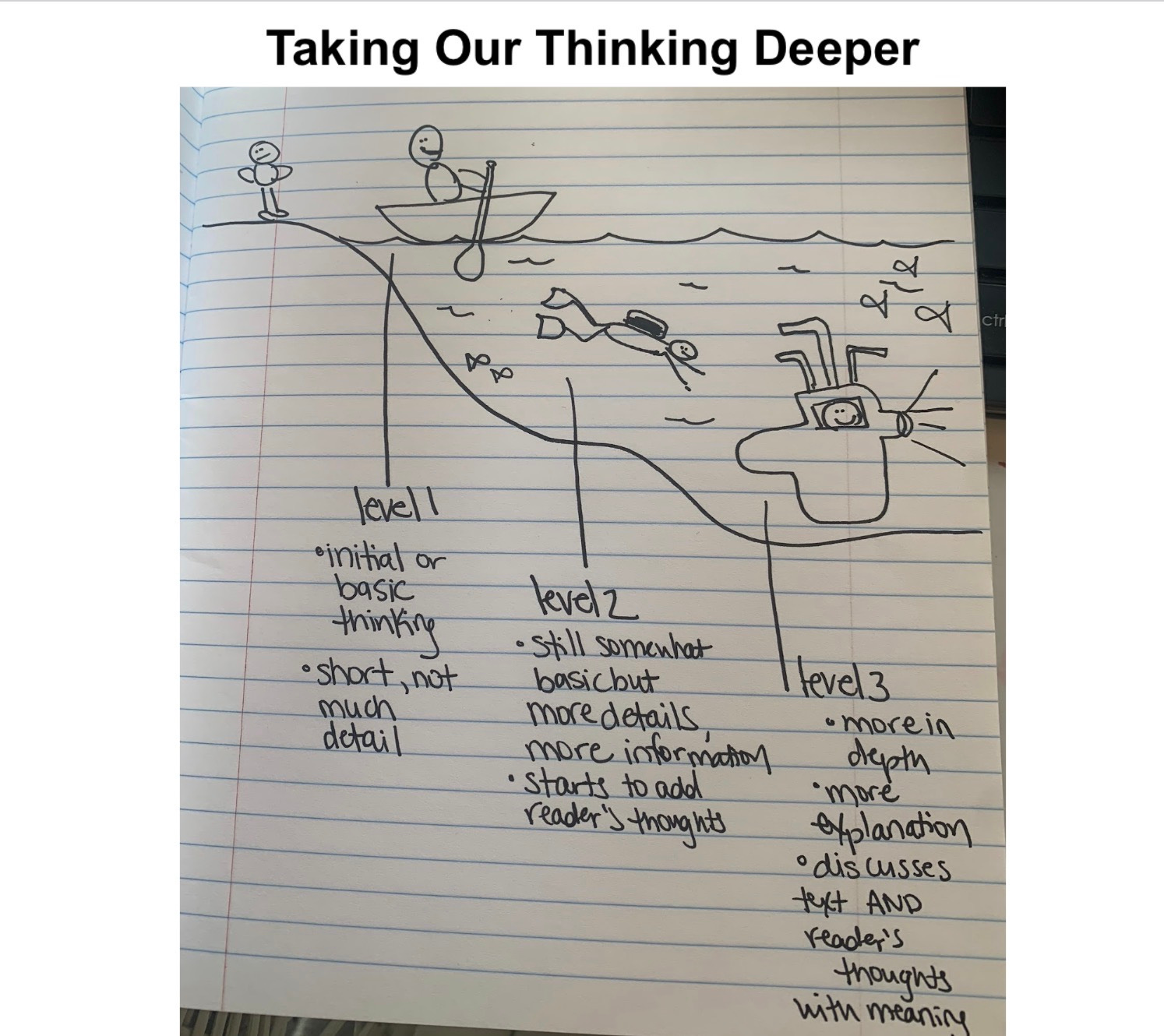
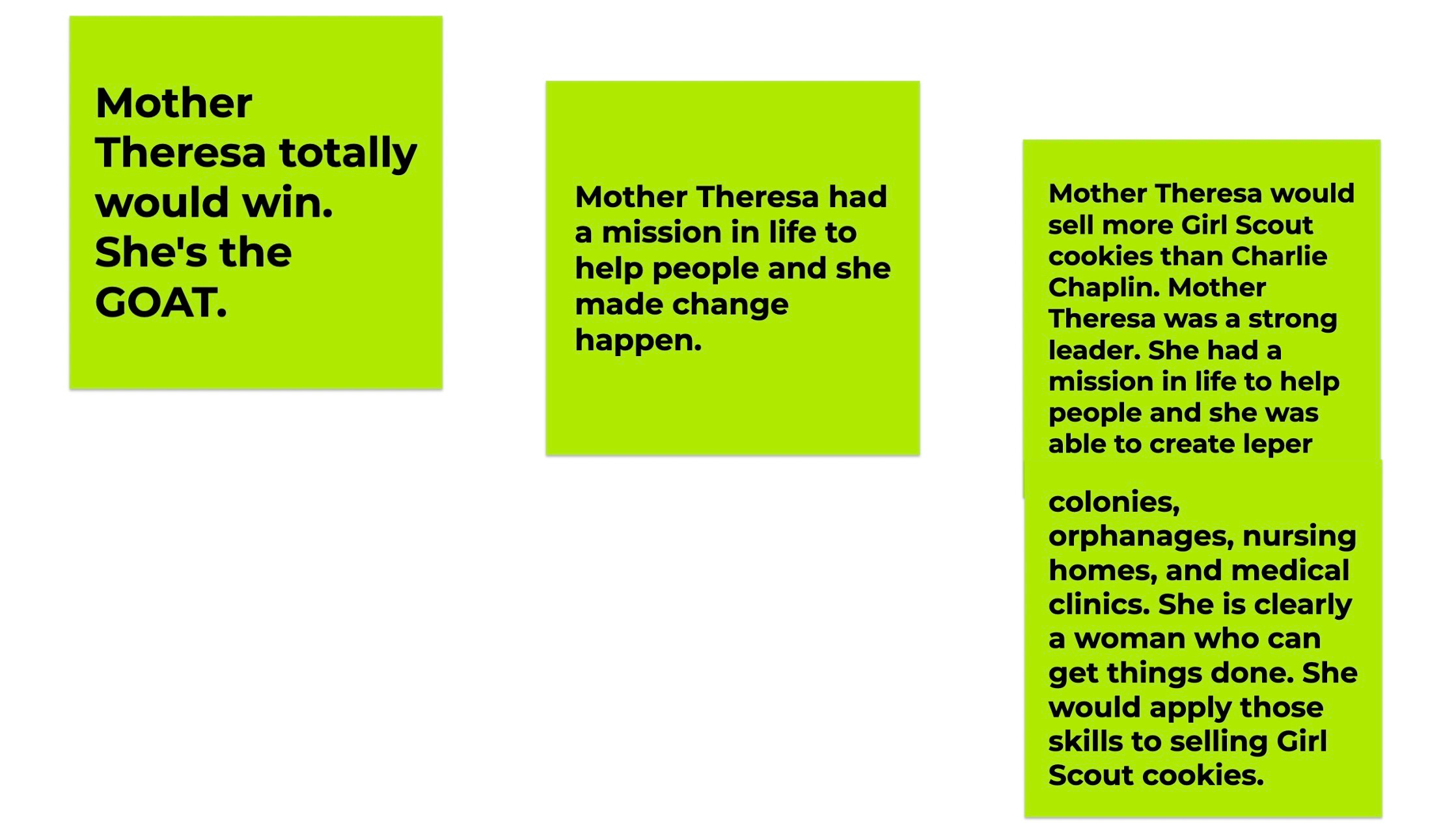
We talked then about ways to model how to write about text and how I often show students three different examples and then talk through what they notice about the comments so they can see what to include when they write about text.
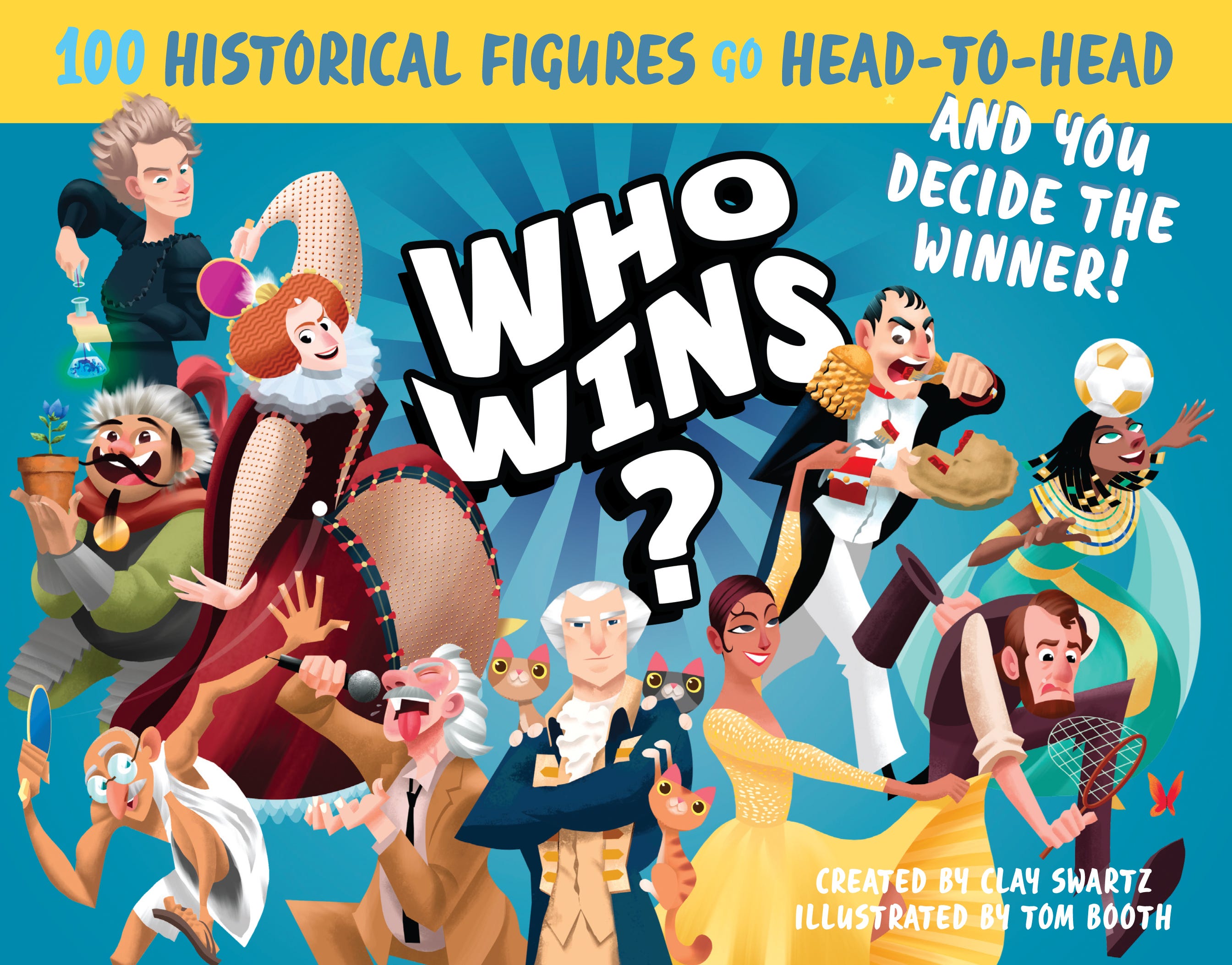
Here’s an anchor chart I’ve used and some sample jots for discussing who would sell more Girl Scout cookies: Mother Theresa or Charlie Chaplin with the book Who Wins? by Clay Swartz. It’s fantastic, by the way.
What I Actually Think About Genres
Since I know I don’t actually value narrative more than the other genres…why is is that I come back to narrative so much? That’s because I believe teaching is about the humans in front of us. It’s about caring for people and nurturing them and helping them grow in all sorts of ways because we see them and value them and are amazed by them.
So when I’m thinking about how to inspire writers, I usually start with…who are you? What do you care about? What are you interested in? What is your story?
But at the same time…I’ve written young adult novels and picture books and I know how much I have learned about myself from writing fiction. I also have written personal essays and I know how much research goes into that. And I’m a blogger-Substacker and I write for educators, so I also know how to write in a way that blends narrative, information, and argument together in a (hopefully sometime?) sophisticated way.
The practices I engage in as a writer are the same no matter what genre I’m writing. It’s the moves I make that might change. And yet, telling an anecdote in order to argue my point is often effective. Or starting with a question can work for any type of writing. Being descriptive and word matters no matter the genre.
Do Genres Really Exist?
I mean, yeah, of course you do.
But I can’t help but wonder if this is another symptom of how education limits student writers. Teachers know students need to practice writing narative and information and argument and responding to reading. These are all genres we need help our students understand and know how to write.
Have we made it too hard to see that writers write no matter the genre? And each genre has qualities that impact the others.
In fact, isn’t this what some of the greatest writers do best? They take elements from one style of writing and bring it to another. I’m thinking of John Green’s The Anthropocene Reviewed or Kelly Barnhill’s When Women Were Dragons.
Zooming out a bit, we want students to be able to see that they have all sorts of options that they can use as needed. When we help them see themselves as writers, we can show them how they can bring themselves to whichever genre they want or or asked to write in.
It’s clear that I need to keep reflecting and sharing my thoughts on this. Hopefully, in sharing my thinking, you feel the invitation — the tug — to reflect on this too. I’d love to hear what you think! Obviously genres are important and helpful but what are some ways we can help students see how their writing skills for different genres actually intersect?
I agree with the idea that genres blend and are often evident in multi-genre works. I wonder if separating genres into distinct categories is a construct of education and curricular marketing. When I think of how students will write during real world experiences, they will most likely use the approach you suggested. I don’t know that when I write that I focus on which genre might be central as much as I focus on which strategies support the message I want to communicate. Thanks for reminding us that many writers use strategies that aren’t limited to one box thinking. I can’t wait to learn more about this.